You don’t need to leave your desk to move your body. Whether you’re in a long stretch of meetings, glued to a deadline, or just hitting that 3 PM wall, these 10 movement breaks can reset your energy and release the tension that builds up from hours of sitting.
These stretches and breathwork exercises are designed for the office environment — no yoga mat, no gym clothes, no embarrassment. Just you, your chair, and a few minutes of your time.
Why Your Body Tightens at a Desk
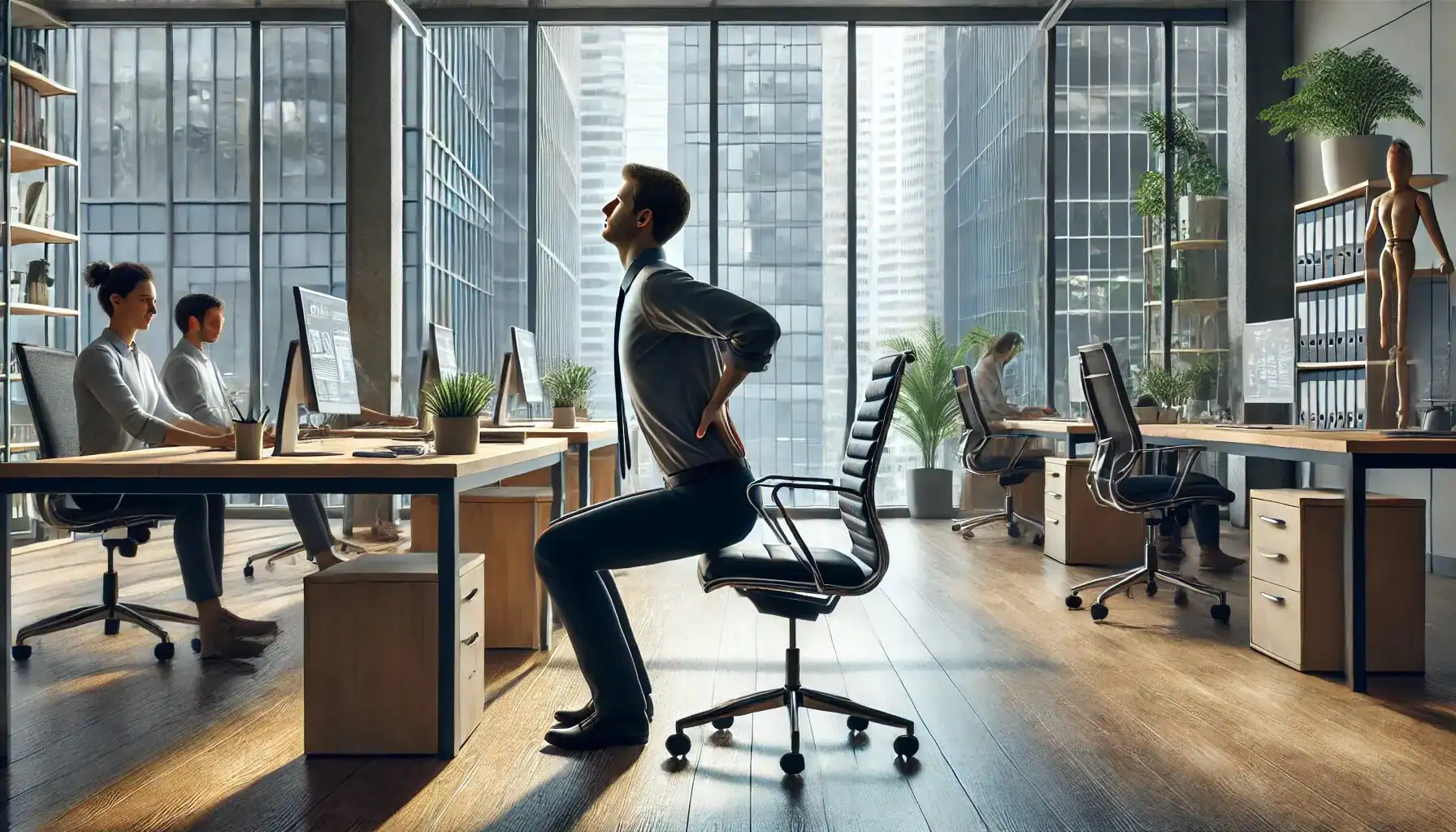
Prolonged sitting creates a perfect storm of physical patterns: hip flexors shorten, the thoracic spine rounds, the neck juts forward, and breathing becomes shallow. Over hours and days, this contributes to headaches, back pain, poor focus, and that persistent low-grade fatigue that caffeine can’t touch.
Movement breaks interrupt these patterns. They don’t require a dramatic commitment — even 5 minutes every 90 minutes makes a measurable difference in energy, mood, and cognitive performance.
10 Desk Stretches & Breathwork Exercises
1. Seated Cat-Cow (Spinal Wave)
Sit toward the front of your chair with feet flat. On an inhale, arch your lower back and lift your chest (cow). On the exhale, round your spine and drop your chin (cat). Repeat 5–8 times. This mobilizes the entire spine and activates the breath.
2. Neck Side Stretch
Drop your right ear toward your right shoulder. Hold for 5 deep breaths, then switch sides. Keep both shoulders down. This releases the upper trapezius and scalene muscles — the classic tension holders for desk workers.
3. Seated Chest Opener
Interlace your fingers behind your head. Gently squeeze your elbows back and lift your chest. Hold for 3–5 breaths. This counters forward head posture and opens the pectorals that shorten during typing.
4. Box Breathing (4-4-4-4)
Inhale for 4 counts. Hold for 4. Exhale for 4. Hold for 4. Repeat 4 cycles. Box breathing activates the parasympathetic nervous system and is used by military, athletes, and surgeons to reset focus under pressure.
5. Seated Spinal Twist
Sitting upright, cross your right leg over your left. Place your left hand on your right knee and twist gently to the right, looking over your right shoulder. Hold 5 breaths. Switch sides. This decompresses the lumbar spine and aids digestion.
6. Wrist and Forearm Release
Extend your right arm in front of you, fingers pointing up. Use your left hand to gently press the fingers back toward you. Hold 5 breaths. Then point fingers down and press the back of the hand toward you. Switch hands. Prevents carpal tunnel and relieves forearm fatigue from typing.
7. Hip Flexor Chair Stretch
Sit sideways on your chair. Let your left leg hang off the side of the chair with the knee bent at 90 degrees. Gently press the knee down and back to feel a stretch in the front of the hip. Hold 30 seconds. Switch sides. This is the most underutilized stretch for desk workers.
8. 4-7-8 Breath (Energy Reset)
Inhale through your nose for 4 counts. Hold for 7. Exhale through your mouth for 8. Do this 3 times. The extended exhale activates the vagus nerve, lowering cortisol and clearing the mental fog that comes with sustained concentration.
9. Shoulder Rolls + Eagle Arms
Roll shoulders back 5 times. Then cross your right arm under your left at the elbows, and try to bring palms together (or back of hands). Hold for 5 breaths. This releases the rhomboids and rear deltoids — areas that chronically tighten from forward arm use.
10. Forward Fold (Rag Doll at Your Chair)
Standing, place your hands on the edge of your desk and walk your feet back until your torso is parallel to the floor. Hang your head between your arms. Pedal your feet to release calves. Hold 5–10 breaths. This inverts your upper body, releases the entire posterior chain, and instantly calms the nervous system.
The Two-Minute Protocol
If you only have two minutes, do exercises 1, 4, and 10 in sequence. That’s a spinal mobilization, a nervous system reset, and a full-chain release — enough to meaningfully shift your state for the next 90 minutes of work.
Set a recurring alarm on your phone labeled “2 minutes.” That label matters more than you think. The barrier isn’t capability — it’s remembering to stop.
For teams looking to bring structured movement breaks into the workplace, Inner Oasis corporate yoga programs are designed to do exactly this — with guided sessions that fit into your team’s schedule and space.